By Catharina Steel, author of Vanishings, The Wythic Wood Mysteries Series | Book One
Contributions from Sarcha Boden and postscript insights from Katie Keridan, PsyD, MPH, and author of The Felserpent Chronicles.

Anxiety in a Nutshell
A single moment of anxiety can be induced by taking on too much. However, ongoing anxiety is often the result of a terrible single event or prolonged experience, or similar experiences at different times over a person’s life. It could also be caused entirely by something else. Whatever its cause—it’s a type of stress response that persists after the situation has passed because the person has suffered a form of injury—not that dissimilar to physical ones, where it takes a long time for the scar to fade—but the damage done remains a sensitive point.
Early Years: Nature’s Quiet Healing
I’ve always loved being outdoors, from hiking with my family as a child to taking daily walks with my greyhound today. Looking back, I never fully appreciated how much being in nature helped me cope with life’s stresses. It wasn’t until much later that I realized how these outdoor activities were a crucial tool in managing my anxiety. I wonder if growing up in an urban environment—without the natural spaces I loved—if I would have found it harder to cope with the bullying I endured at school? Would I have found it harder to cope with the bullying and negative experiences that continued into adulthood?
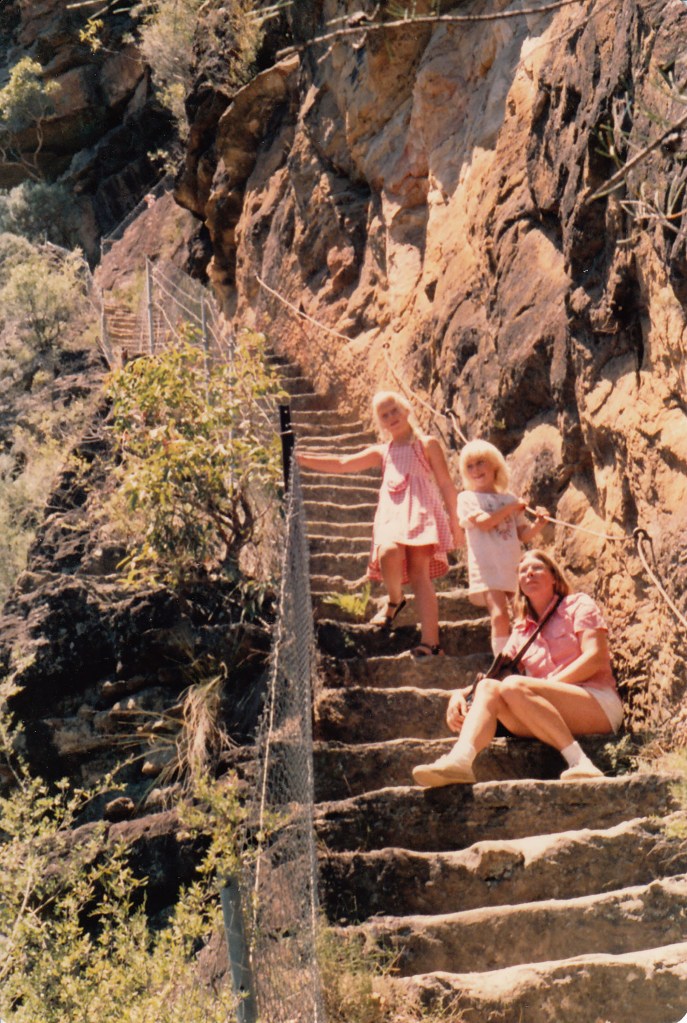
According to research, nature-based activities can significantly reduce symptoms of anxiety and depression (Barton & Pretty, 2010). In my own experience, I see how it allowed me to recharge in ways I didn’t notice at the time.
Young Adult: Finding Peace in Motion
As I entered adulthood, I continued to find solace in nature. I remember walking through my neighborhood with my Walkman (remember those?) and later, my Discman, iPod, and now, my phone. During these walks, I escaped the noise of the world. Over time, I realized music helped in urban environments, but the true peace came when I ventured into nature. The sounds of the world around me—birds, leaves rustling, the wind—provided a calm I couldn’t replicate with headphones.
When I lived in Sydney, I frequently visited large parks that were big enough to dim the sounds of the city. I could walk, breathe, and lose myself in its natural rhythm. Those moments offered me peace, allowing me to quiet my mind. Studies confirm that time spent in nature can help reduce stress and anxiety. One study found that a 90-minute walk in a natural environment can reduce activity in the brain region associated with depression and anxiety (Bratman et al., 2015). I often wonder how many of us today allow ourselves the time to truly “be” with ourselves in such spaces.
Anxiety: A Constant Battle
These days, the anxiety is sometimes a low hum, but the real battle is when it’s an overwhelming tension that takes over. There are moments when I feel almost paralyzed, barely able to breathe, and my body holds onto tension that affects my physical movements—causing physical pain. I know I’ll never fully “recover” from it, but I continue to find ways to manage and understand it.
For me, learning what’s happening in my mind and body is key to understanding my stress responses, so I can identify the best tools to manage them. One such tool is grounding myself, which involves noting physical items around me to bring myself back to the present. Nature also continues to play a significant role. Research shows that grounding techniques—including engaging with nature—can lower heart rates and blood pressure, significantly reducing anxiety (Moss, 2019). This is especially relevant for me since I often rely on nature’s calm to reset my body’s nervous system when anxiety strikes.
Tech Overload and the Noise of Life
There’s no denying that the modern world can be overwhelming. Between my phone, computer, and tablet, I often feel plugged in—the constant buzz of notifications adding to my anxiety. I’ve developed a sensitivity to noise, something I never had growing up. I find myself lowering the volume of my TV, while visitors crank it up, leaving me feeling agitated.
This sensory overload intensifies the challenges of living in a tech-heavy world. I can’t help but think of children today, growing up in a world where they’re always connected, always reachable. They’ll never experience the freedom I did as a kid—leaving the house after breakfast to meet friends, to explore, and be present in the moment. It was a carefree time. I wonder how today’s generation will cope with the pressure and anxiety they face, constantly tethered to their devices. There’s something powerful in the simplicity of unplugging and going outside to play.
Outdoor Exercise: Nature’s Medicine for Anxiety
While technology can feel overwhelming, nature offers a respite. It’s been shown that outdoor activities provide more anxiety-relieving benefits than indoor exercise. In fact, a study from Stanford demonstrated that 90 minutes of walking in nature, compared to urban settings, significantly decreased activity in the brain region linked to depression and anxiety (Bratman et al., 2015). For me, the physical act of walking—whether around my neighborhood, or along the beach, listening to the waves—has a profoundly calming effect.
A Holistic Approach
There’s more to managing anxiety than walking or hiking. Taking a holistic approach to your health, ensuring proper nutrition, plays a critical role in managing anxiety. Certain foods increase inflammation in the body, which not only impacts physical health but can also exacerbate anxiety (Moss, 2019). By choosing whole, nutritious foods, I’ve found it easier to manage the physical and emotional stresses of life.
Final Thoughts
I wholeheartedly recommend hiking, walking, or any outdoor exercise as part of a balanced approach to managing anxiety. While it may not solve all mental health struggles, it’s a proven tool that can reduce stress and improve mental well-being. Each person needs to figure out what works best for them, but remember that a holistic approach—looking at diet, physical activity, and mental health together—can significantly enhance your quality of life.
References:
- Barton, J., & Pretty, J. (2010). What is the best dose of nature and green exercise for improving mental health? Environmental Science & Technology, 44(10), 3947–3955. https://doi.org/10.1021/es903183r
- Bratman, G. N., Hamilton, J. P., & Daily, G. C. (2015). Nature experience reduces rumination and subgenual prefrontal cortex activation. Proceedings of the National Academy of Sciences, 112(28), 7567–7572. https://doi.org/10.1073/pnas.1510456112
- Moss, C. (2019). Nutrition and mental health: An overview of current research and future perspectives. Frontiers in Psychology, 10, 2283. https://doi.org/10.3389/fpsyg.2019.02283
 Women Writing Other Worlds